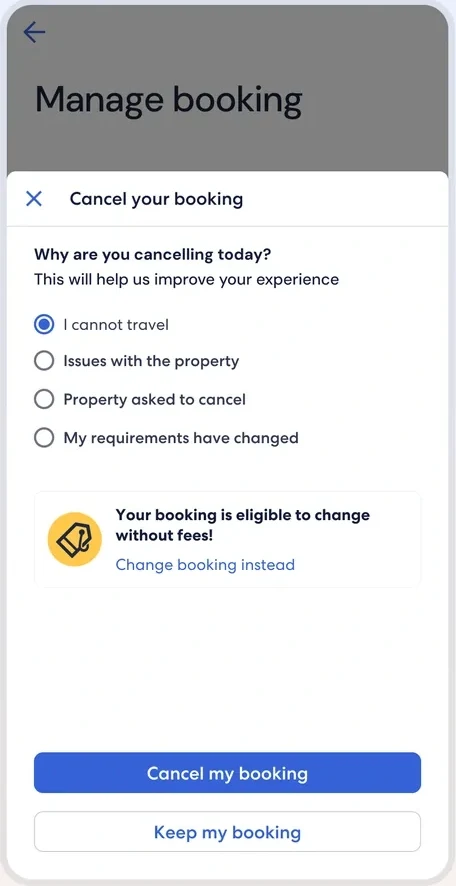
Ask why they’re cancelling and surface the relevant change option.
The idea behind this is that it would help us collect more data. A lot of doubts followed.
How do you make changing a booking as easy as cancelling one? I worked across the cancellation experience, booking rules and longer-term servicing strategy to help travelers adjust their plans without losing their trip.
Role
Senior Product Designer
Team
Content, PM, Engineering
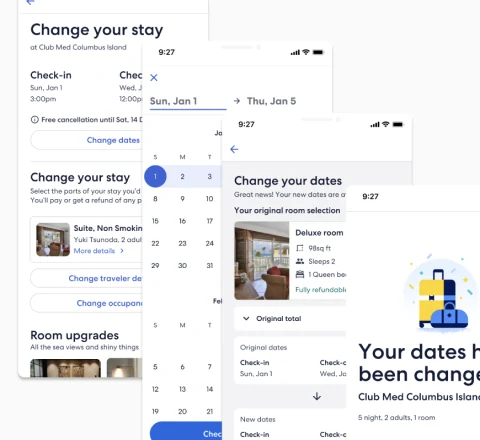
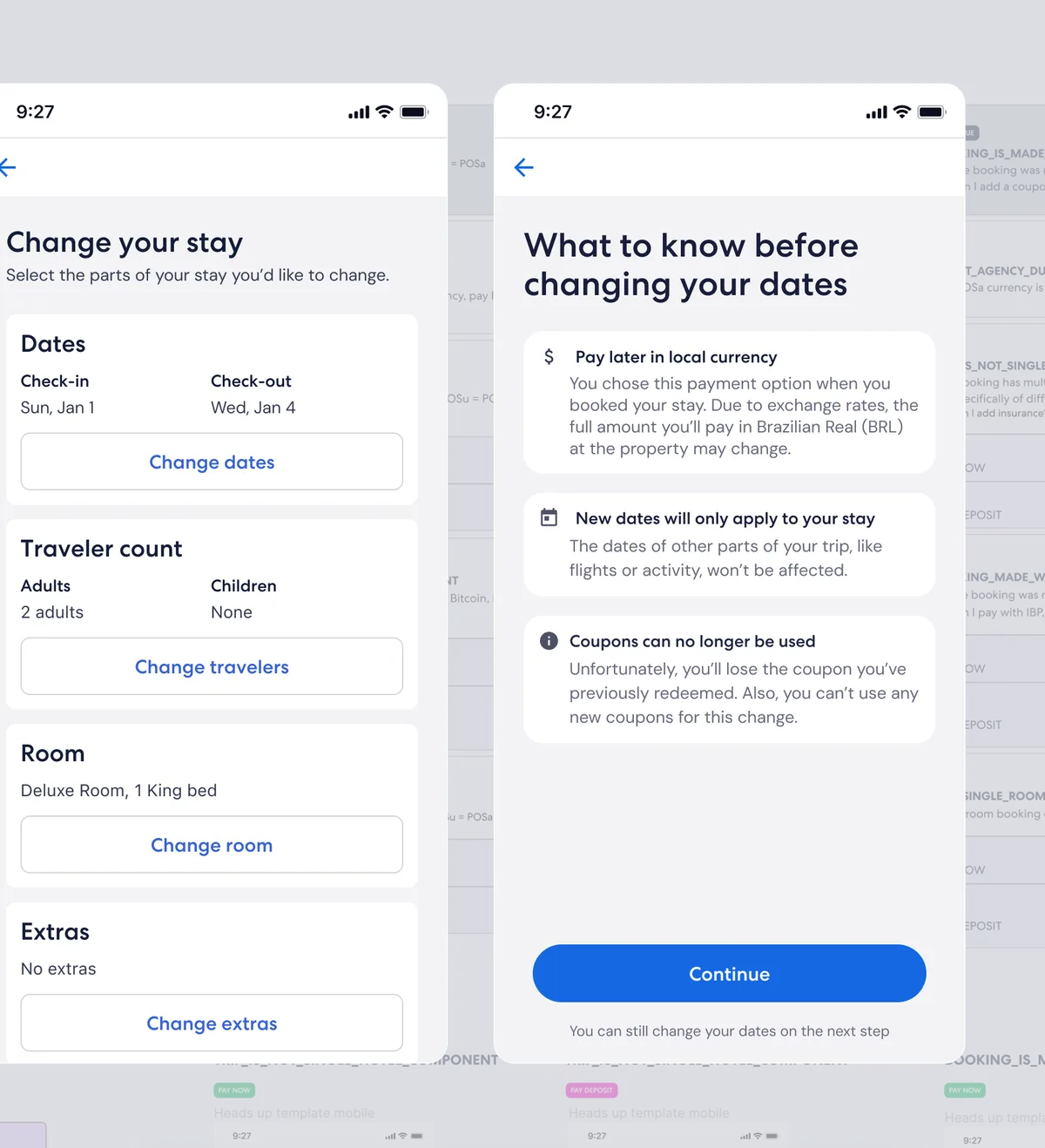
Future state: change dates flow, by Ashley Riehlin.
This project started from an earlier win.
Cancelling used to be a common frustration, so Expedia made it a single click. Travelers loved it: more of them sorted things out themselves, calls to customer support dropped, and more than 1 in 10 re-booked the same destination within a week (59% of them the same hotel).
But cancellations went up 1%. Could we steer travelers towards changing their booking instead?
I worked on a taxonomy of cancellation reasons, drawing on Voice of the Customer data to understand what was driving travelers to cancel their trips.
One thing stood out: many didn’t want to cancel at all, but make a change instead. Add another guest, or move their beach holiday to the following weekend when the forecast looked better.
That got me thinking: what would it take to let more travelers change their bookings directly in the app?
A full redesign of the experience and underlying architecture wasn’t in scope (yet). So where did I start?
My requirements have changed
My nice has decided to join us on our trip, I need to adjust my booking to accommodate her and her needs. It is unclear to me if I can make the changes I require or not.
Sort / hard change + flightsReason for cancel (FE)
I need a different solution
Room
Property
I am not convinced by this property anymore
I have done more research since booking this property, and the reviews do not convince me. The host / property is not responsive and I do not trust this property.
Reason for cancel (FE)
I am unhappy with this property
Taxonomy excerpt: sentiment / scenario.
Cancelling was one tap; change options meant hunting through the booking details. Redesigning that specific flow was left out of scope, as it was deemed outside our team’s responsibility (..I have a lot of thoughts on this).
Instead, I looked at the areas we could realistically have an impact on and move quickly with, the first one being the cancel flow itself.
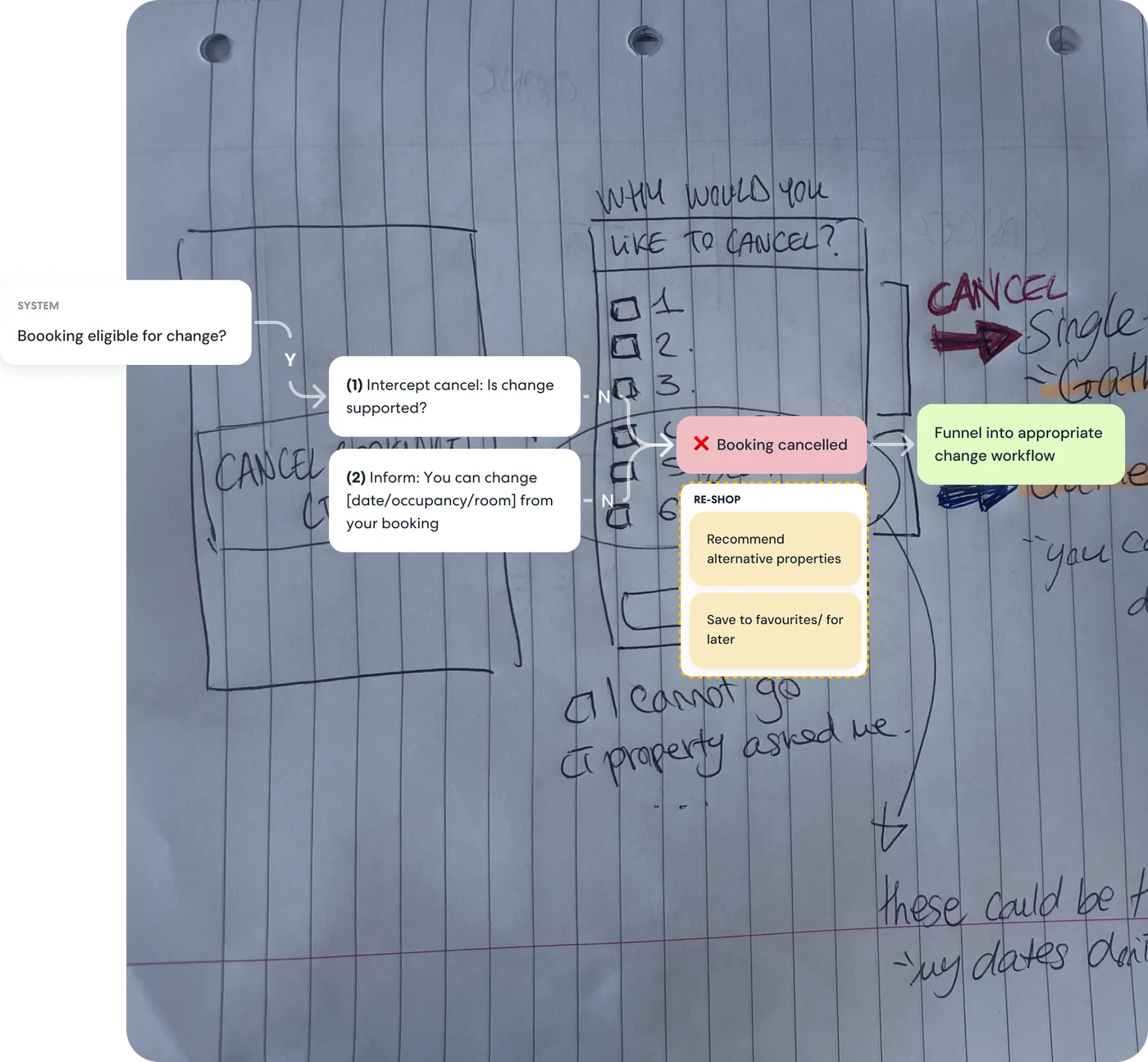
TL;DR: travelers weren’t fans of being asked why they wanted to cancel, before the fact. Even less so if at that point they weren’t presented with another option. Some were concerned their answer could have negative repercussions on their future bookings, others simply didn’t want to justify themselves, and rightly so.
The idea behind this is that it would help us collect more data. A lot of doubts followed.
Lighter, less decision making upfront, but less data collection on our side.
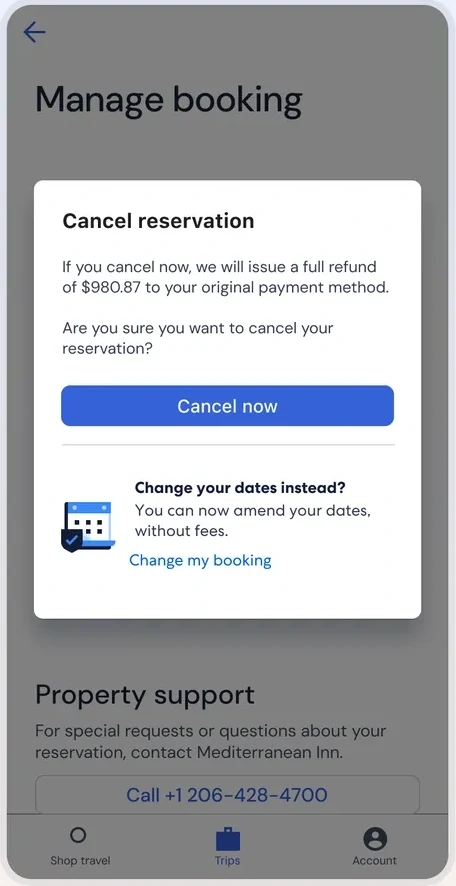
Asking “why” on its own was the least-liked option in testing, while the nudge to change landed well.
At the time, the change capabilities weren’t fully built, so we couldn’t be specific about what the change options were, as that logic lived in another part of the flow.
Asking why without offering another option wouldn’t reduce cancellations (our primary metric) and could hurt repeat bookings, so I made the case for not building it on its own.
The order in which we decided to build “the thing” was as important as deciding what not to build.
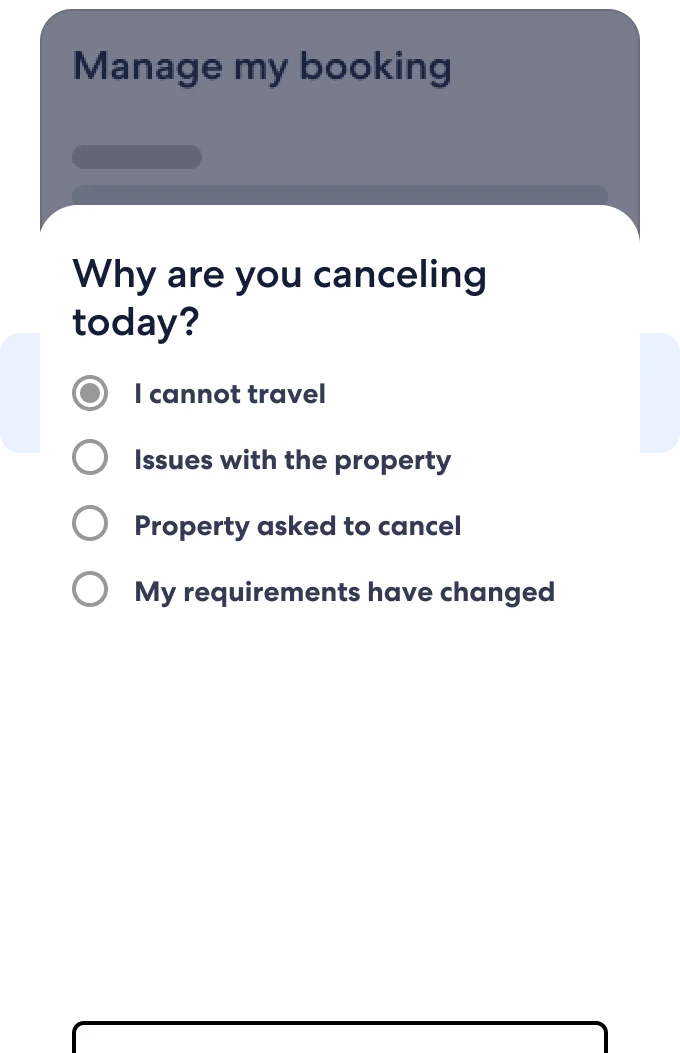
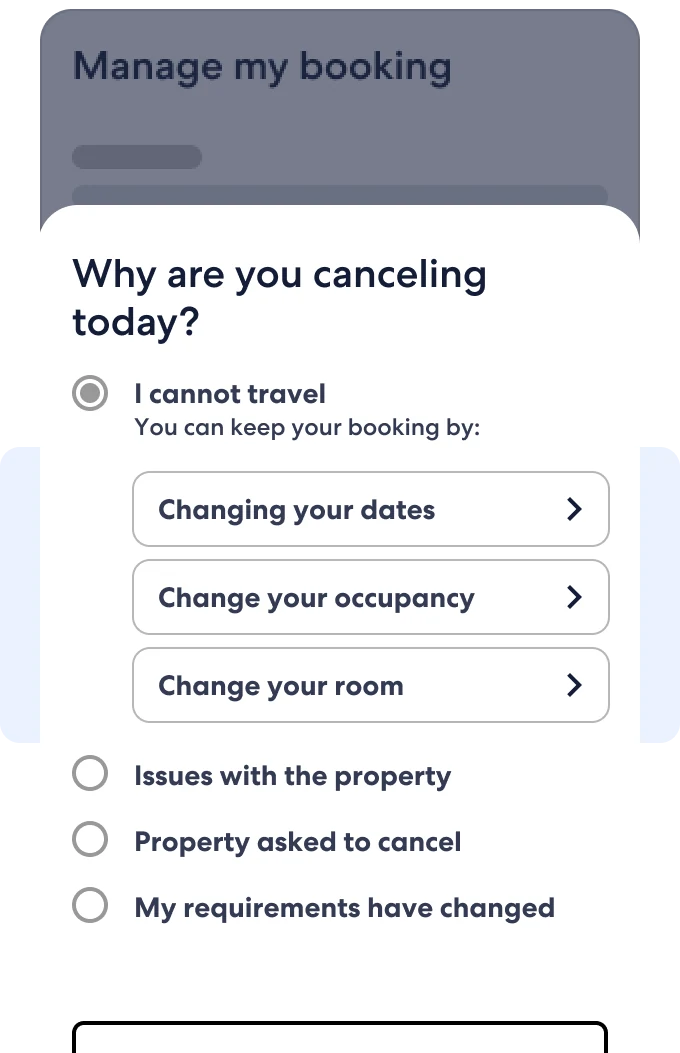
What would make changing a booking possible, before making it easier?
And how could we start making progress without a complete, end-to-end redesign?
Enable an additional 36% of travelers to self-serve lodging changes by removing legacy booking restrictions and introducing a flexible front end that would dynamically communicate the impact of each change (on payment methods, coupon use, cancellation policies etc.).
The “would we build this if we couldn’t build that” argument won. We built a gentle prompt to change over our cancellation dialog, so travelers see the options that fit their situation at the moment they’re about to leave.
If you cancel now, we will issue a full refund of $987.51 to your original payment method.
Are you sure you want to cancel your reservation?
Cancel now
Voice of the customer was good for an initial read on the issue and to start brainstorming ideas, but we needed quantifiable data to make our case for change stronger. Based on the findings from the approaches testing, we launched a post-cancellation survey to help us with that.
Before you go, tell us why you cancelled. It takes a minute.
How satisfied were you with your stay?
Why did you cancel your booking?
Anything else you’d like to tell us?
I left the team with a vision for one place to manage every booking, adapting help, changes and cancellation options to the traveler’s needs from booking to check-in.
Handed over
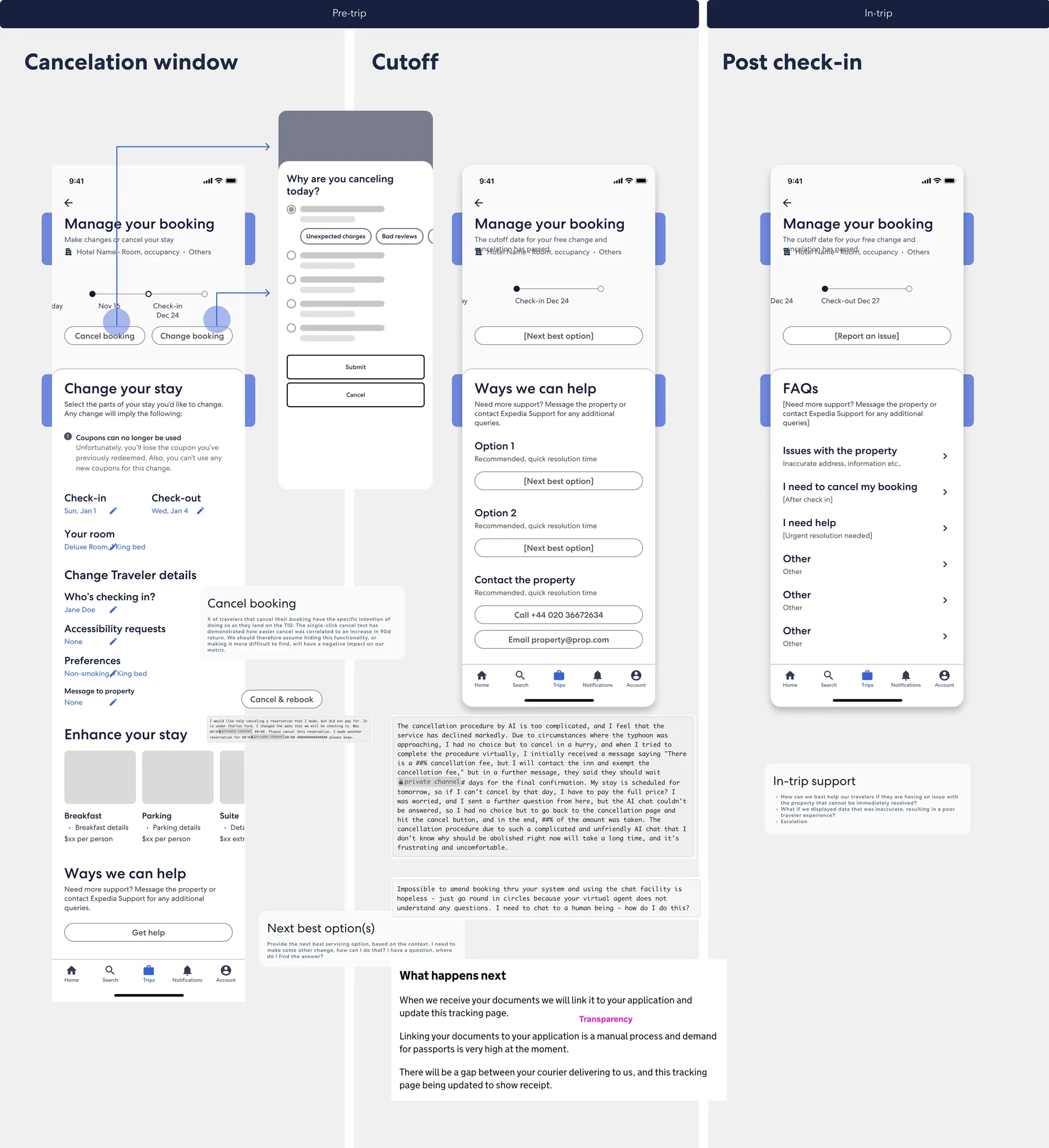
Removing friction from cancelling worked, a little too well. The answer wasn’t adding it back, but making changing as easy as cancelling.
Asking “why” on its own felt like a hurdle. Adding it alongside a real alternative made it feel like help.
Removing old rules that stopped bookings from being changed beat any new feature, and gave us the evidence to make the case for a single help centre.